Most tourists come to New Orleans just for an intense, unpredictable walk along this street, the most historically (in)famous in the city. Located in the French Quarter, extending from Canal Street to Esplanade Avenue, it’s always crowded with people either about to get drunk or besotted. There’s no in between when it comes to this thirteen blocks long, pedestrian avenue.

It is the street with the most bars, sex, drugs, performances, dance, food, freaks, history, alcohol, promiscuous deals, parties, tatoos, fun, people from balconies throwing colorful beads down at you, Lucky hot-dog stands, burlesque shows, pagan rituals, neon lights, “loose morals” individuals, Voodoo shops, horse back policemen, gamblers, “fainting dog” shows and everything else you can imagine. It’s there. And to those who come to The Big Easy for the first time, it is also a rich insight into the neighbourhood’s past.


The name hasn’t changed ever since Adrien De Pauger, royal engineer, decided upon it in 1721, as a homage paid to France’s ruling family at the time – The House of Bourbon.

In 1788, during The Great Fire of New Orleans, most of the buildings were destroyed. By that time, the city had been given to the Spanish who have rebuilt most of the damaged structures that are still standing today. For this reason, most of the Bourbon Street and French Quarter architecture is Spanish, not French.


Since the early 1900, the area was better known for it’s prostitution, drinking and gambling establishments, which eventually gained it a bad reputation. By the 1950s, nightclubs here entertained the masses with wild parties, burlesque shows and striptease acts, transforming it into a red-light district. And since every publicity is good publicity, up to this day Rue Bourbon is the most famous street in New Orleans attracting millions of tourists every year.

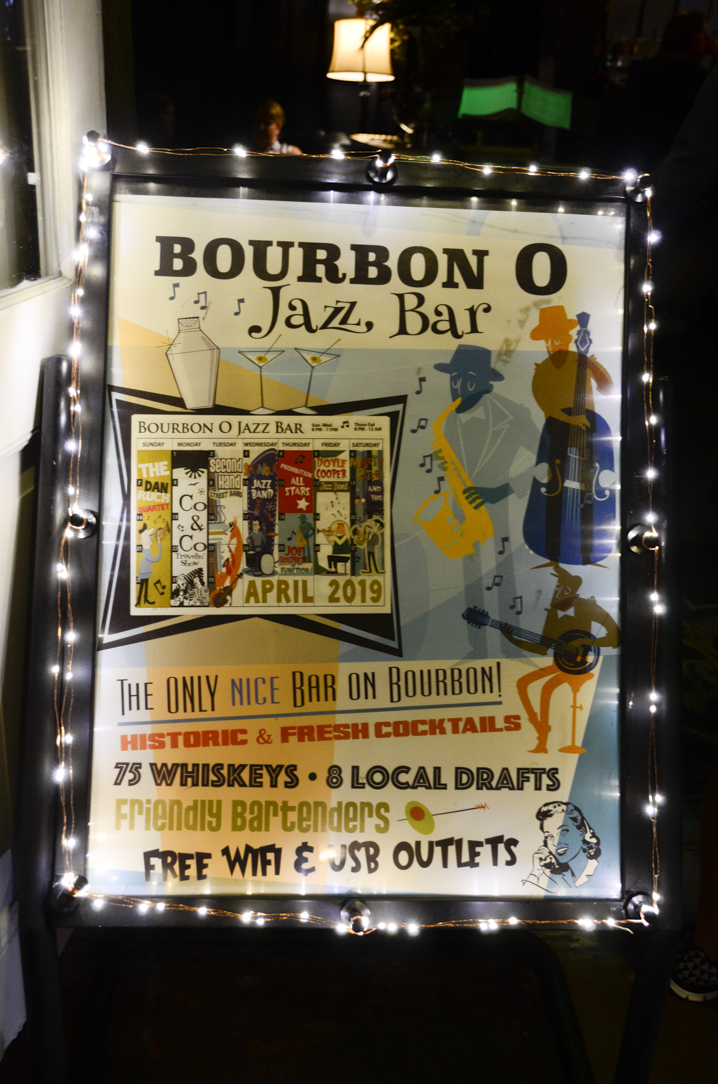
In all fairness though, Bourbon Street is said to have been the first place to witness the birth of jazz music, as a form of entertainment at the brothels, through artists such as Jelly Roll Morton and King Oliver.


We walked the street many times at different day and night hours, got tipsy on Frozen Hand Grenades, laughed, danced to various music rhythms coming out too loud and a little off at times, stopped to take pictures of the mounted police officers, cooled down with ice-cream, tipped generously, looked for decent restrooms and lost ourselves in the hot, humid swamp air – mostly because there was something about this street besides it’s obvious temptations, that kept us coming back and ask for more.

To me, I know it was the people. I could have spent hours just watching them as they passed me by, elegant or foul-smelling, silk dresses and cowboy hats, backpacks and t’shits with breasts, empty eyes and brown skin, asymmetrical skirts and high heels, rich and poor, disproportionate bodies and forgettable faces, smokers, heavy drinkers and their children.


I kept wondering what was it they were running away from, because most of them seemed lost, inebriated zombies. And I wondered what I looked like to them. Happy? Curious? Unimportant? Strange? Frustrated, because I wouldn’t be allowed inside the bars without my ID? Dizzy, because my guy would find a way to be getting us drinks anyway? Too revealing, with one of my tank top straps intentionally dropped? Too old or too young perhaps? A little scared? An overwhelmed outsider with ginger hair and round cheeks?

Green Eyed Kisses,
Error: No posts found.
Make sure this account has posts available on instagram.com.